
The Complete Accademia Gallery Map & Floor Plan Explained
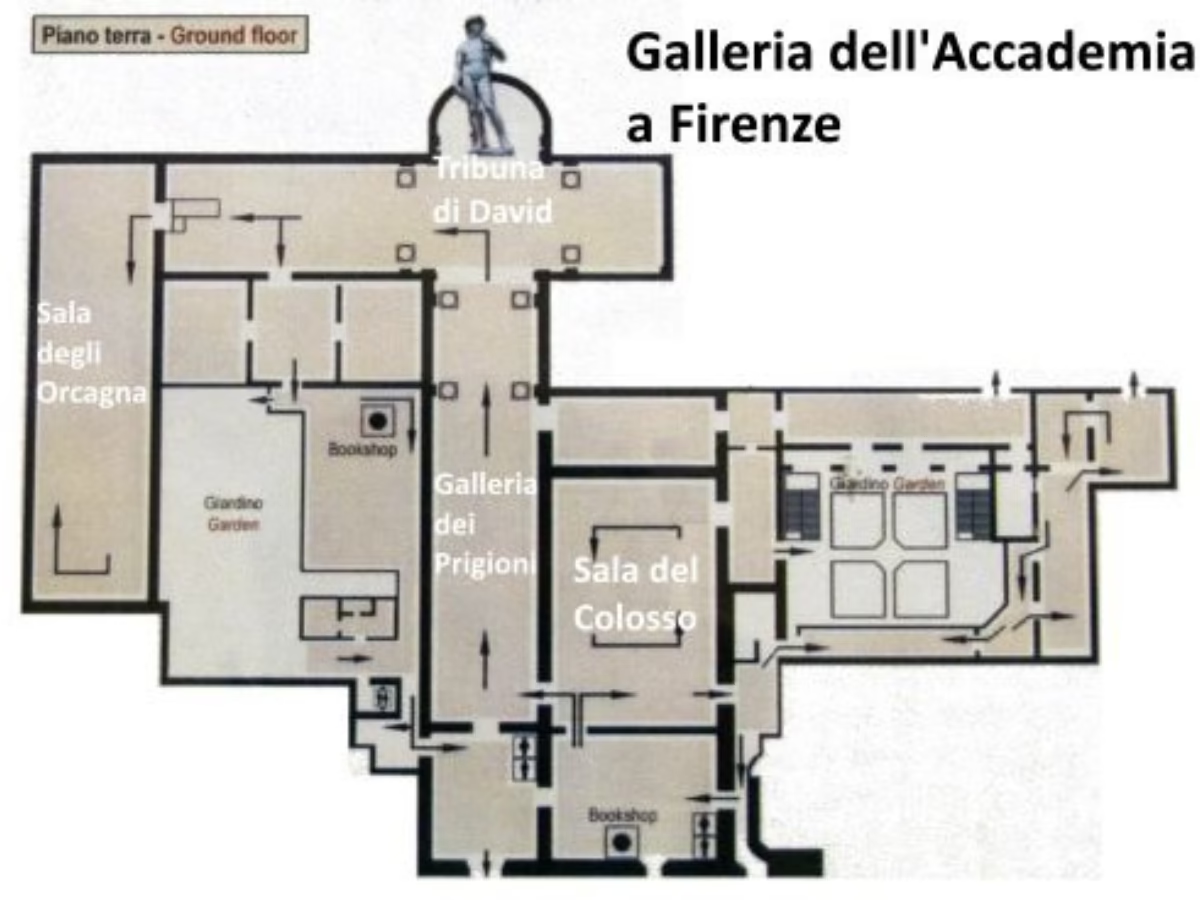
The Accademia Gallery is a compact, largely linear museum across two floors. The ground floor contains the main Michelangelo collection — Hall of the Colossus, Galleria dei Prigioni (Prisoners corridor), and the Tribune (David). The Byzantine and Gothic painting galleries are at the back of the ground floor. The upper floor holds the Museum of Musical Instruments and additional painting rooms. The route from entrance to David takes approximately 3–5 minutes if you walk without stopping.
One of the Accademia Gallery’s practical advantages is that it is genuinely easy to navigate. Unlike the Uffizi, which extends across 45 rooms, the Accademia’s collection is concentrated in a handful of interconnected spaces. Understanding the layout before you arrive removes uncertainty and helps you plan how to use your time — particularly if you want to see the quieter sections that most visitors walk past.
The Entrance
Address: Via Ricasoli 58/60, 50122 Florence Accessible entrance: Via Ricasoli 60 (a few steps north of the main entrance, with ramp access)
After passing through security and depositing any oversized bags in the free cloakroom, you enter the main gallery from the entrance foyer. The bookshop is immediately inside, where audio guide devices can be rented (€6). Toilets are also accessible from the entrance area.
The main gallery corridor runs directly ahead of you from the entrance. If you turn right immediately after entry, you reach the Museum of Musical Instruments wing (upper floor). Most visitors follow the natural flow straight into the Hall of the Colossus.
Ground Floor: Room by Room
1. Hall of the Colossus (Sala del Colosso)
What it is: The first major room of the main gallery, immediately inside the entrance.
What’s here: The centrepiece is Giambologna’s full-scale plaster model for the Rape of the Sabines (1582) — a rare 16th-century model in unfired clay, built at 1:1 scale for the marble version that now stands in the Loggia dei Lanzi in Piazza della Signoria. Around the walls, early Renaissance Florentine paintings from the 15th and early 16th centuries: works by Botticelli, Ghirlandaio, Filippino Lippi, Perugino, Paolo Uccello, and Fra Bartolomeo.
What most people do: Walk through quickly with their eyes on the corridor ahead. The paintings on the walls are genuinely good and worth 10 minutes.
What to look for: Botticelli’s two Madonnas displayed here are less famous than his Uffizi masterworks but show his handling of domestic devotional subjects. The Giambologna plaster model shows an artist working out a complex three-figure composition in clay before committing to marble — fascinating in itself and a counterpoint to the finished marble version you can see in the Loggia dei Lanzi.
2. Galleria dei Prigioni (Hall of the Prisoners)
What it is: The long main corridor running from the Hall of the Colossus to the Tribune. This is the central spine of the museum.
What’s here: Michelangelo’s four Prisoners (Slaves) — the Awakening Slave, Young Slave, Bearded Slave, and Atlas Slave — displayed two on each side of the corridor. Also St. Matthew (begun for Florence Cathedral’s façade, c.1503–1505) and the Palestrina Pietà (attributed to Michelangelo, contested).
What most people do: Walk straight through toward David without stopping, or glance briefly at each figure.
What to look for: Slow down here. The Prisoners reward careful attention — the degree of finish varies radically between figures (the Awakening Slave barely begun, the Bearded Slave the most resolved), and the visible tool marks tell the story of how marble sculpture was actually made. The Atlas Slave — with the block of unworked marble pressing down on the figure’s head — is the most philosophically pointed of the four. Look for the transition from rough point chisel work to smoother gradina tool work on the same figure.
Looking back: After you have seen David and are returning from the Tribune, turn and look down the corridor toward the Hall of the Colossus. This reverse view — Prisoners framing the corridor, light from the Tribune behind you, the Hall ahead — is different from the approach and worth a moment.
3. The Tribune
What it is: The apsidal domed hall at the end of the corridor, purpose-built for David by architect Emilio de Fabris in 1873.
What’s here: Michelangelo’s David, standing on its original pedestal at the centre of the domed room. Benches around the walls. Natural light from the dome skylight above.
What most people do: Enter, walk around David, photograph it, leave.
What to look for: Walk the full circumference — David is designed to be seen from all angles, and the contrapposto reads differently from behind and from the side than from the front. Sit on the bench and look at the statue for several minutes rather than photographing it. Morning light through the skylight hits the marble’s surface most directly; the quality of illumination shifts through the day. Find the stone in the right hand — many visitors miss it entirely. Compare the vein prominence of the raised left hand with the loaded right hand. Look at the gaze — David is not looking at you. He is looking at something slightly to your left.
4. Gipsoteca Bartolini (Sala dell’Ottocento / 19th Century Room)
What it is: A large hall off the Tribune containing 19th-century plaster and clay models by Lorenzo Bartolini (1777–1850), one of the most important Italian sculptors of the Romantic period.
What’s here: Hundreds of plaster casts, busts, studies, and models from Bartolini’s workshop. Bartolini was professor of sculpture at the Accademia di Belle Arti between 1839 and 1850 and had a wide international clientele — Italian, Russian, and English aristocracy. This room recreates the atmosphere of his studio. Also paintings by 19th-century artists who studied or taught at the adjacent Academy.
What most people do: Look briefly from the doorway and move on.
What it offers: The Gipsoteca is one of the most atmospheric rooms in the Accademia — white plaster casts in a large hall, the light falling on dozens of faces and figures. If you have an interest in 19th-century sculpture or in workshop practice, this is unusually rich material. Even without that interest, the contrast between the Romantic-era aesthetic and the Renaissance works you have just seen is interesting.
5. Florentine Gothic Gallery (Three Rooms, Ground Floor)
What it is: Three rooms at the far end of the ground floor, past the Gipsoteca, dedicated to Florentine painting from the 13th and 14th centuries.
What’s here: Gold-ground panel paintings — crucifixes, triptychs, Maestà compositions — from Florentine churches and convents suppressed in the early 19th century. The collection spans from the Byzantine-influenced painting of the late 13th century through the proto-Renaissance painting of the Orcagna brothers in the mid-14th century. Key works include Pacino di Bonaguida’s Tree of Life and the Giotto fresco fragment.
What most people do: Walk through quickly or skip entirely.
What it offers: The largest gold-ground panel painting collection in Italy. The context for understanding why the Renaissance was a revolution — these rooms show the visual tradition that Renaissance artists were responding to and transforming. See our Byzantine & Gothic Art guide for the full breakdown.
Upper Floor: Room by Room
The upper floor is accessible from the ground floor via lift (near the main entrance) or stairs (near the entrance to the musical instruments wing).
6. Museum of Musical Instruments
What it is: A dedicated wing of the upper floor, connected to the Luigi Cherubini Conservatory, housing approximately 50 historic instruments from the Medici and Lorraine Grand Duke collections.
What’s here: Instruments by Bartolomeo Cristofori (inventor of the piano), Antonio Stradivari (including the only surviving Stradivari in entirely original unmodified condition), Niccolò Amati, and others. The collection spans the late 17th to early 19th centuries. Court paintings by Anton Domenico Gabbiani depicting the Medici musical court. Six multimedia stations with recorded sound.
What most people do: Miss it entirely.
What it offers: Among the most historically significant collections in the Accademia. Always quiet. See our dedicated Museum of Musical Instruments guide.
Important: Upper floor closes at 6:40 pm, 10 minutes before the museum’s main closing time of 6:50 pm.
7. Upper Floor Painting Rooms (Florentine Painting 1370–1420)
What it is: Rooms on the upper floor dedicated to Florentine paintings from approximately 1370 to 1420 — the transitional period between the Orcagna generation and the full early Renaissance.
What’s here: Important works by Lorenzo Monaco — one of the most technically accomplished Florentine painters of his generation — and altarpieces commissioned by Florentine guilds from the late 14th and early 15th centuries.
What most people do: Miss it or walk through very quickly.
What it offers: A calm, well-lit, undervisited set of rooms. The Lorenzo Monaco works in particular have a lyrical quality that is distinctive and different from both the Gothic rooms below and the early Renaissance rooms in the Hall of the Colossus.
The Recommended Route
For a standard visit (60–90 minutes): 1. Enter → Hall of the Colossus (10 min) → glance at Botticelli and Ghirlandaio on the walls 2. Galleria dei Prigioni (15–20 min) → stop at each Prisoner, find the Atlas and the Awakening Slave 3. Tribune (20–25 min) → walk full circumference, sit, look 4. Brief look at Gipsoteca Bartolini (5 min) 5. Exit via the bookshop
For a thorough visit (90 minutes–2 hours): 1. As above, plus: 2. Return through the Galleria dei Prigioni looking back toward the Hall of the Colossus 3. Florentine Gothic Gallery (15–20 min) → Tree of Life, Giotto fragment 4. Upper floor: Museum of Musical Instruments (15–20 min) 5. Upper floor painting rooms (10–15 min, Lorenzo Monaco)
For a quick visit (under 45 minutes): David and the Prisoners only. Enter the Hall of the Colossus, walk straight down the corridor to the Tribune. Spend 20 minutes with David. Walk back through the Prisoners.
What You Might Otherwise Miss
The Gipsoteca Bartolini. Behind the Tribune, one of the most atmospheric rooms in the museum — virtually never crowded.
The Museum of Musical Instruments. The Stradivari tenor viola in original condition is one of the rarest objects in Florence. Upstairs, almost always quiet.
The Florentine Gothic Gallery. The Tree of Life by Pacino di Bonaguida is a major work that most visitors walk past entirely.
Looking back down the Prisoners corridor from the Tribune. A different perspective that most people never take.
The Botticelli Madonnas in the Hall of the Colossus. Two Botticelli paintings displayed at eye level in a room with modest crowds — more accessible than his Uffizi works, less famous.
Practical Information
Opening hours: Tuesday to Sunday, 8:15 am to 6:50 pm. Last entry 6:20 pm. Upper floor closes 6:40 pm. Closed every Monday.
Cloakroom: Just past the security checkpoint. Free. Required for bags over 40×30×18 cm.
Toilets: Near the entrance on the ground floor and on the lower level.
Lifts: Connect the ground floor to the upper floor. Accessible by visitors with mobility requirements.
Bookshop: Near the exit, by the Byzantine galleries. Audio guide rental (€6) available inside the entrance.
Frequently Asked Questions
Where exactly is Michelangelo’s David located in the Accademia Gallery?
The David stands in the Tribune (the central apse room) at the end of the main ground floor corridor. You’ll walk past Michelangelo’s unfinished sculptures on both sides of the hallway leading to it.
How long should I plan to spend in the Accademia Gallery?
Plan 1–2 hours to see the highlights comfortably, including the David and main paintings. A quick 30-minute visit is possible if you only want the David; allow 3+ hours to explore all sculpture galleries thoroughly.
Should I start on the ground floor or upper floor?
Either works logistically, but most visitors naturally begin on the ground floor where the David is located. If you want quieter, less-crowded viewing, visit the upper floor first to explore before the main crowds arrive.
Which rooms in the Accademia have the fewest visitors?
The upper floor sculpture galleries and side rooms on the ground floor (away from the David corridor) typically remain uncrowded. These areas contain important works that most visitors overlook while rushing to the Tribune.
How many separate rooms or halls does the Accademia Gallery have?
The main collection spans approximately 6–8 interconnected rooms and halls, making navigation far simpler than the Uffizi’s 45 rooms. This compact layout lets you see everything without exhaustion.
Do I need to walk through every room to see all the major artworks?
No—the David and key paintings are impossible to miss on any route. However, the layout contains quieter sections with important sculptures and paintings that reward exploration beyond the main visitor flow.
